Chicken Tikka—From royal origins to iconic street food
Even those of you who are not ardent fans of cuisine from the Indian subcontinent must have heard about or tried chicken tikka. Small bite-sized pieces of boneless chicken, marinated in various spices and grilled in a tandoor or on open charcoal fire, chicken tikka is one of the best-loved street foods across the region, and also all the way on the other side of the world—the UK and US.
Don’t be confused about your chicken tikka
If you are new to the world of tikka, it is useful to note that it can be prepared with boneless pieces of lamb, beef, mutton, etc. When we talk about chicken tikka, it is important to remember that tandoori chicken, tandoori chicken tikka, grilled chicken tikka, and chicken tikka masala are different types of dishes. Most commonly, chicken tikka is confused with chicken tikka masala.
When bite-sized pieces of chicken are marinated in spices and cooked on skewers in a clay oven, i.e., the tandoor, they are called tandoori chicken tikka. The same dish can be prepared on a grill, in which case the tikka is not tandoori. But chicken tikka masala is a dish in which the bites of chicken are served in a creamy, spicy sauce. And tandoori chicken is not boneless; a whole chicken or its pieces are prepared with spices in a tandoor.
Before we dive into the story of the tikka, we must pay attention to the clay oven or tandoor used to prepare these traditional, deliciously smoky, and tender meaty bites.
Origin of tandoor and tandoori cuisine
In a wide region stretching from Southern, Central, and Western Asia, including the South Caucasus (present-day Armenia, Azerbaijan, and Georgia), similar clay ovens were used. The word tandoor signifies this specific type of oven. This word has ancient roots. In Persian, it came from Akkadian (an extinct Semitic language used in ancient Mesopotamia, particularly parts of today’s Iraq and Syria). The Akkadian word tinūru is composed of two parts: tin (mud) and nuro (fire).
Words used for this type of clay oven in other languages are similar: Turkish tandır, Azerbaijani tandir, Kurdish tenûr, Georgian tone, Arabic tannūr, Armenian t’onir; Persian tandūr and tannūr. In India and Pakistan, the words tandoor or tanoor are commonly used to refer to it.
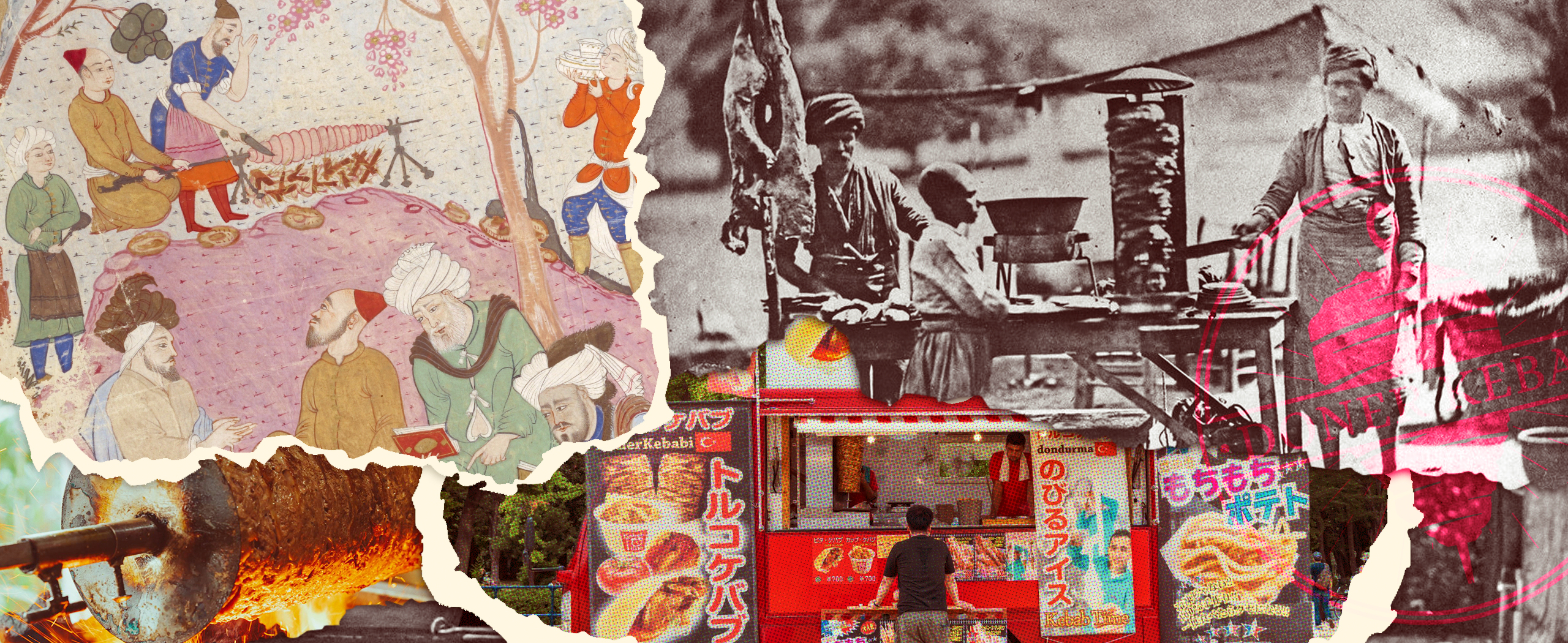
Archeological finds reveal that 5000 years ago, tandoors were used in the Indus Valley civilizations, but it was the Mughals who brought the modern tandoor to India. It is made of clay that can withstand high temperatures and has a cylindrical jar or urn-like shape. Charcoal or wood fire heats the oven from the inside. Ancient types of tandoors were built underground up to the neck. Later, ovens were built that could be placed above ground level or were constructed in the shape of a clay hut.
The tandoor is frequently used to make a variety of bread, but it also provides a method of preparing meat with a unique flavor and texture. The outer layer is seared and crisp, while the juices remain sealed inside, making it succulent and smoky.
It is believed that Mughal Emperor Jahangir invented a portable tandoor. The emperor’s cooks took the oven wherever he travelled. This indicates how popular tandoori cuisine was among the Mughal royals.
Various methods of tandoori cooking
Different methods can be adopted to prepare food in a tandoor. The fire in the pit generates heat as a modern oven does during baking. Direct heat from charcoals introduces a grilling element. The juices from marinated meat or chicken drip onto the coals, creating a distinct smoky flavor. Flatbreads of various types are prepared in a tandoor by sticking them onto the hot tandoor walls.
Preparing food in a tandoor imparts a unique flavor to breads such as tandoori naan and to meat, fish, and chicken. Additionally, the use of various marinades is part of tandoori cooking. Traditionally, yogurt acts as a base for most marinades.
The royal origin of chicken tikka
According to stories handed down through generations, it was the first Mughal Emperor, Babur, the founder of the Mughal dynasty in India, who inspired the invention of chicken tikka. It is said that Babur was so afraid of choking on a chicken bone that he ordered his chefs to prepare boneless chicken for him. His Punjabi chefs then created chicken tikka. The dish consisted of boneless, bite-sized pieces of chicken marinated and grilled.
According to some, the dish was called ‘joleh’ at the time, a Persian word meaning pieces. The word tikka also comes to Urdu and Hindi from the Persian ‘tekke’, ‘tikka’, ‘tike’, referring to bits, pieces, or chunks of food.
The concept of grilling boneless meat chunks became popular in the wider region. The Turkish call it ‘tikkü’ and in Azerbaijan the dish is called ‘tike’.
Innovations and popularization of chicken tikka
Today, you can find a wide variety of chicken tikka in the form of street food across the globe, in eateries of all types, including high-end restaurants, and even versions of the dish created by Michelin-star chefs.
While tandoori cuisine and the preparation of boneless chicken pieces in marinade originated in the Mughal times, Kundan Lal Gujral is credited with innovations that perfected the tandoori chicken preparation, leading to the popularization of this dish and tandoori chicken tikka.
Gujral was born in Punjab in 1902 and, in the 1920s, opened a restaurant in Peshawar where he introduced tandoori cuisine and popularized the modern tandoori chicken and chicken tikka. Gujral later moved to India and founded the now international Moti Mahal restaurant. (Gujral is also credited with the invention of other dishes, including butter chicken, but this is disputed by a rival restaurant, Dryaganj, founded by Kundan Lal Jaggi, who once worked with Gujral.
Regardless of disputes and disagreements that usually surround culinary innovation and invention, chicken tikka is a wildly popular dish known throughout the world.
Emergence of chicken tikka masala
The reason many people think chicken tikka and chicken tikka masala are the same dish is that masala, or a spicy sauce, is added to chicken tikka. It is said that in the 1970s, the dish was created by Ali Ahmed Aslam, a Bangladeshi chef in a Glasgow restaurant, Shish Mahal, to please a British customer who found the chicken tikka too dry. He added canned tomato and cream soup to the tikka, thus creating this enormously popular dish. Claims that chicken tikka masala is a true British fusion dish have disturbed some in India, where the dish is believed to have been mentioned by earlier sources.
Although the canned soup story is repeated in different versions in many places, it is not accurate. Digging deeper reveals that it is very possible that the dish emerged simultaneously in different areas, as an innovation by different cooks during the 1940s, when eateries across India under British rule were adapting local dishes to the British taste. Since the British preferred meat in gravy, chicken tikka masala appeared as a natural response, probably drawing inspiration from butter chicken served at Moti Mahal restaurant in New Delhi in 1948. In a sense, it is a fusion dish, but not based on a British, branded canned soup!
Many types of chicken tikka marinade
Chicken tikka is incredibly versatile. Its marinade can be prepared using different spices, herbs, and other ingredients. Thus, it is easy to adapt the dish to local preferences and offer a variety of flavors. In Turkey, for example, boneless chicken pieces are marinated using Mediterranean spices and grilled over charcoal. The Azerbaijani chicken tike kebab uses a yogurt-based marinade with sumac and saffron.
In India and Pakistan, there are several popular types of chicken tikka.
The delicious Punjabi tikka is prepared with ginger-garlic paste, red chili powder, mustard oil, yogurt (hung curd or thick curd without any liquid), coriander powder, green chili paste, and spice blends such as garam masala. The marinated chicken is then placed on skewers and prepared in a tandoor or grilled over open charcoal fire. You can find a recipe here if you want to prepare this dish at home.
Then we have the delectable chicken malai (milk cream) tikka with its super-creamy texture. The boneless chicken pieces are marinated in thick cream with added spices such as ginger, garlic, cumin powder, coriander powder, black pepper, lemon juice, and gram flour. Find a recipe by Savita here to try in your kitchen.
Yet another variation gives us the fresh and spicy hariyali (green) chicken tikka. Yogurt, vinegar, cumin, salt, amchur (a spicy powder made from unripe mango), mint, cilantro, and chilies are pureed, and chicken meat is left to marinate in this mixture. Nosheen shares a recipe to prepare this dish here for you to give it a go at home.
Concluding words…
The story of chicken tikka once again proves that our culinary history is an ancient tale of cultural intermingling. We might have disagreements over who invented a dish, but ultimately, such disagreements disappear and fade away with one bite of the foods we all love and share, and have created together.
It is in this spirit of our connectedness that Kaiser & Colonel Kababz bring you tandoori chicken tikka and malai chicken tikka just waiting to melt in your mouth!