Puff pastry: From a regional delicacy to a global favorite
To many who love baked delights, the sight of a gorgeously baked French croissant, Beef Wellington, or Apple Strudel can be something truly awe-inspiring. The crispy, thin golden layers of dough make one wonder at the skill of the chefs who create the puff pastry. Once you see video clips of master patissiers folding endless layers of dough, you might think that this would be impossible to do at home. Of course, the average person cannot achieve the results produced by trained patisseries, but it is possible to understand the puff pastry and to admire the knowledge and skills of pastry chefs even more.
Behind each delicious bite is a history of innovation, creativity, and refinement of ancient recipes as they evolved in different places over various periods of time.
Origin of puff pastry
You may have seen various stories floating around the internet about the invention of this laminated dough. They say it was created by the French landscape painter Claude Lorrain while he was an apprentice to a pastry chef. Another story has it that in 1645, a young man named Claudius Gele invented the technique of making this dough while he was an apprentice to a French pastry chef. Allegedly, the father of this young man was sick and could eat only a diet of flour, water, and butter. Claudius wanted to bake something for his father using only these three ingredients. He accidentally created puff pastry when he folded the dough around the butter, and baked it despite his mentor’s warning that the recipe would not work.
These stories are inaccurate, but they have been circulating for so long that many people still believe them to be true. Actual research shows that the earliest mention of dough resembling puff pastry is made in an anonymous recipe from a 13th-century Medieval Arab cookbook written in Moorish Spain. The book was translated from Arabic by culinary historian Charles Perry, one of the most prominent experts on Medieval Arabic cuisine. According to Perry, puff pastry originated in Moorish Spain in the 13th century, where culinary interest obsessively focused on the layering of dough. There was not one but several ways of making layered pastry dough.
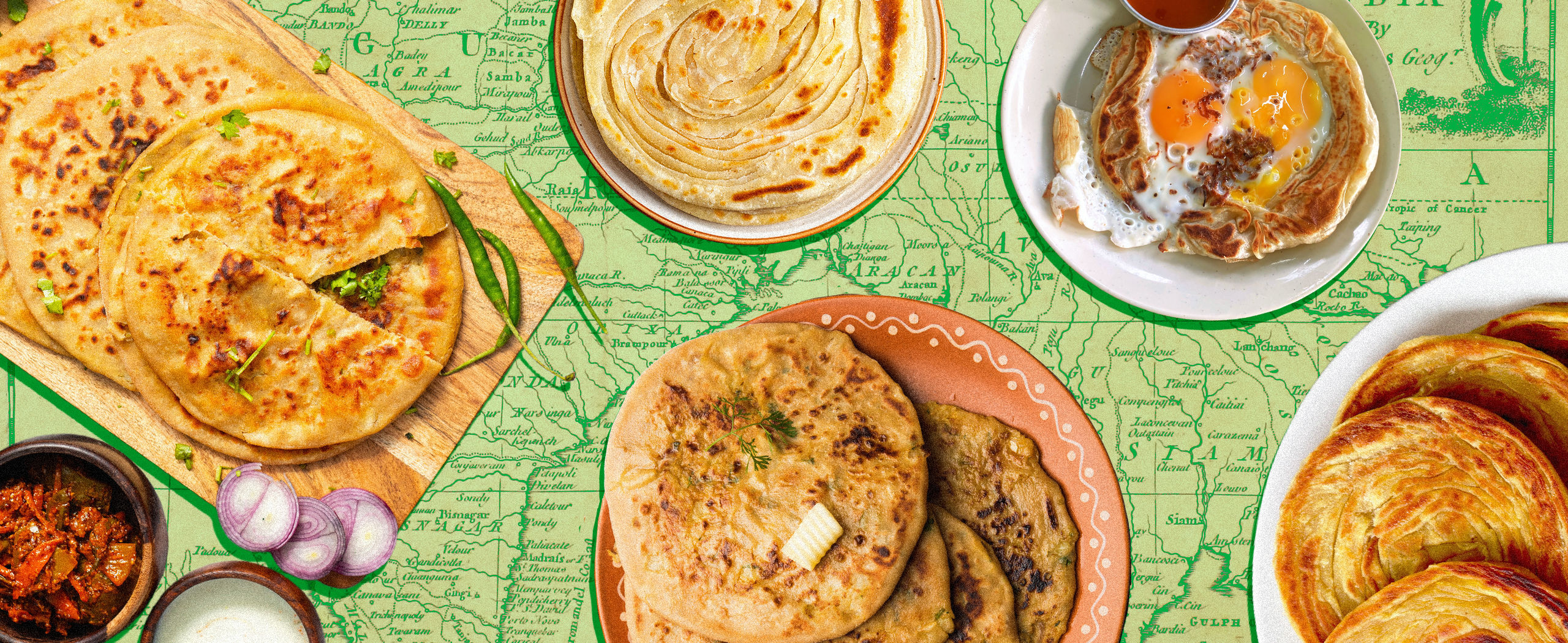
Musammana was a type of flaky flatbread made from laminated dough in Moorish Spain. Fine semolina or wheat flour was used, and the dough was smeared with butter. It was folded, rolled, and twisted before it was flattened out and fried. Musammana bread did not look like the puff pastry of today. It was more similar to the present-day Indian paratha or Moroccan breakfast bread, msemmen. The bread was also known as muwarraq (waraq means paper, or leaf, and the term denotes ‘consisting of layers as thin as paper’). But when it comes to the principal method for preparing the dough, this bread could be called the predecessor of puff pastry as we know it. Furthermore, the ‘leaf or paper-thin’ pastry sheets stacked on top of each other used in many recipes from that time also influenced the spread of filo pastry.
The Arab technique for preparing laminated dough was adapted later in Spain, and the first known puff pastry recipe appears in the Spanish cookbook Libro del arte de cozina (1607) by Domingo Hernández Maceras. Eventually, these techniques for preparing pastry dough spread to other parts of Europe, as well as other regions in the world.
Types of puff pastry around the world
The most common association with puff pastry is that of the croissant from France. Indeed, renowned patissiers such as Antonin Carême, who defined and described the principles and processes for creating puff pastry, were French.
French desserts such as Mille-feuille or the Napoleon Pastry (made with puff pastry, vanilla cream, and marbled icing), Brasillé (a traditional oval shaped pastry sprinkled with sugar and baked until golden at the top), and savories such as Pâté Lorrain (marinated meat wrapped in puff pastry), Feuilletés au Munster (a savory puff pastry with Munster cheese and crème fraîche, are only some of the iconic French dishes made with this type of laminated dough. But there are many cultural variations of this type of dough around the world. Even within Europe, there are countless ways in which this pastry is used to create sweet and savory puffs.
The famous Eccles cake made in the Greater Manchester region is a well-loved English dessert. It is made with a crispy puff pastry filled with cinnamon, raisins, and brown sugar, glazed all around with honey. And of course, Danish pastries have a claim to international fame. In Denmark, these puff pastries filled with custard and sour cherry preserve are known as “wienerbrød” (Viennese bread). They emerged when Danish bakers went on a strike in 1850. At that time, bakeries hired foreign bakers, including those from Austria. The Viennese techniques for making the laminated butter dough helped create the Danishes.
The puff pastry in its present form has also made its way into Middle Eastern cuisine. The traditional Lebanese cheese sambousek is made with homemade dough, which is very much like its European counterpart. This is why many modern recipes use pre-made puff pastry dough to cut time and effort. Different varieties of puff pastry triangles filled with lamb, beef, or chicken, with vegetables and olive oil, are prepared throughout the Middle East. The famous Turkish börek is often made using puff pastry dough, with spinach, feta, and/or cheddar cheese. The Greek version of this pie, spanakopita, is also frequently made with puff pastry.
The South Asian curry puff, a staple snack in Malaysia and Singapore, is a variation believed to have been inspired by the empanada, the Cornish pasty, and the samosa. Its dough is laminated using a technique similar to puff pastry. These flaky curry puffs are filled with spiced potatoes, onions, and peas. Chicken and hard-boiled egg are common additions. In Burma, the curry puff has a filling of duck meat and potatoes.
The Indian puffs are usually filled with spiced vegetables. In Pakistan, puff pastry is most commonly used to make popular savory pie-like snacks sold in bakeries. They’re filled with chicken, beef, or vegetables, and locals refer to them as patties.
How to make puff pastry
So, how do patisseries prepare this layered laminated dough?
The classic version is made using the lamination technique. A block of butter is wrapped completely and sealed inside the dough. The dough is then folded several times by being rolled out and folded onto itself repeatedly. The first fold creates many layers, and the repeated process of rolling and folding, or the pastry folding technique, produces the dough that makes puff pastry. For foods such as croissants, the dough gets a taste of yeast. For other dishes, it can be without.
There are three key tips to make puff pastry dough successfully: Ideally, the temperature of the butter and dough should be maintained between 65 and 70 degrees (Fahrenheit). At this temperature, the dough is less soft, firmer, and easier to handle.
While preparing the dough, a bit of excess flour is always necessary to stop the rolling pin, surface, etc., from sticking. It is important to remove all excess flour from the dough to keep it from becoming hard and falling apart. The dough needs to rest in the refrigerator during preparation. This helps the gluten relax, making it easier to roll out.
Of course, you don’t have to prepare the dough at home. You can make your very own favorite food with store-bought puff pastry dough. Or you could try viral recipes for an upside-down tart, chocolate twists, apple turnovers, Brie bites, and many more.
Find a recipe by Erin Jean McDowell to make your puff pastry at home from scratch. But if you are not ambitious enough to try this recipe because it involves several steps and requires a lot of work and patience, you can also use Sally McKenney‘s recipe to make the less demanding ‘rough puff’.
Just in case you are not in the mood to bake from scratch, but want some delicious savory puff pastry snacks to appear by magic, why not try Kaiser’s delicious flaky chicken puff, or the spinach and cheese one, or perhaps with olives and feta?
Concluding words…
The puff pastry is a versatile kind of dough and represents an amazing historical process of the evolution of culinary knowledge and skills. Just as it brings flour, water, and butter together perfectly to create delightful and luxuriously textured desserts and savory dishes, it also links together the culinary expertise from many different continents and cultures.