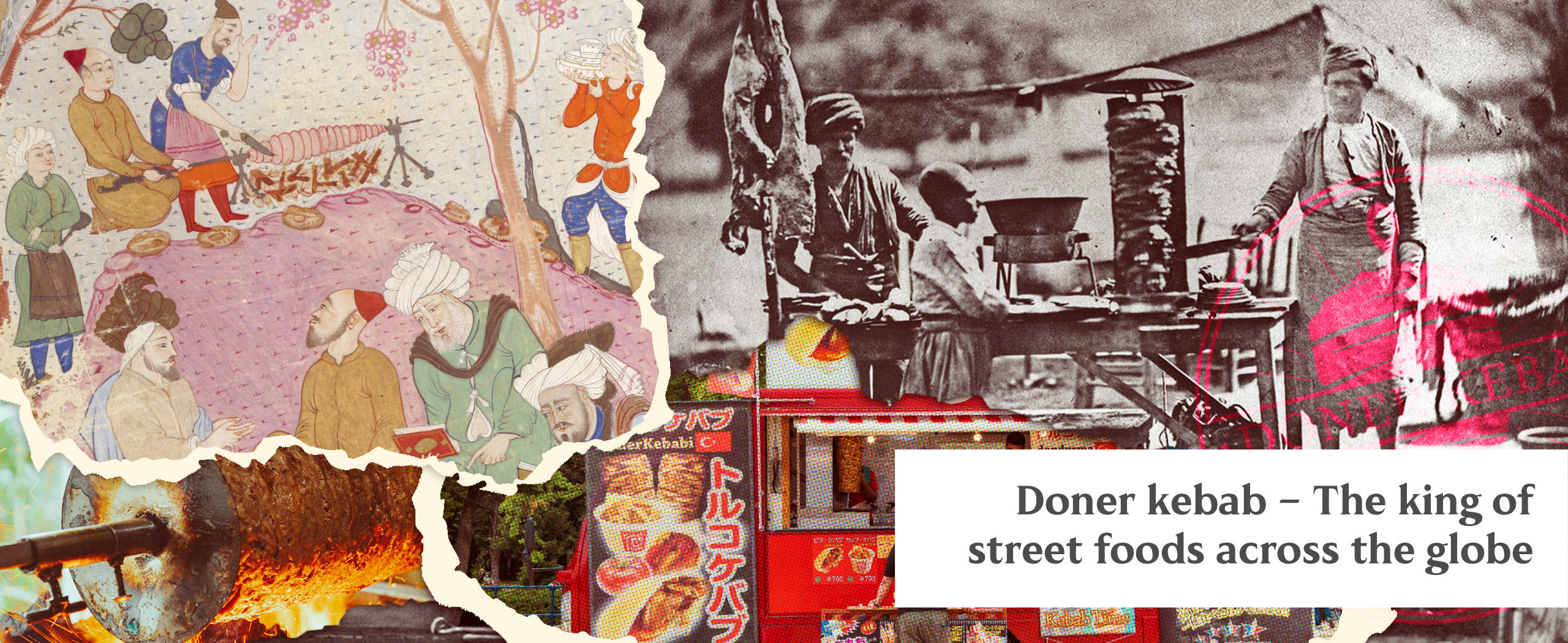
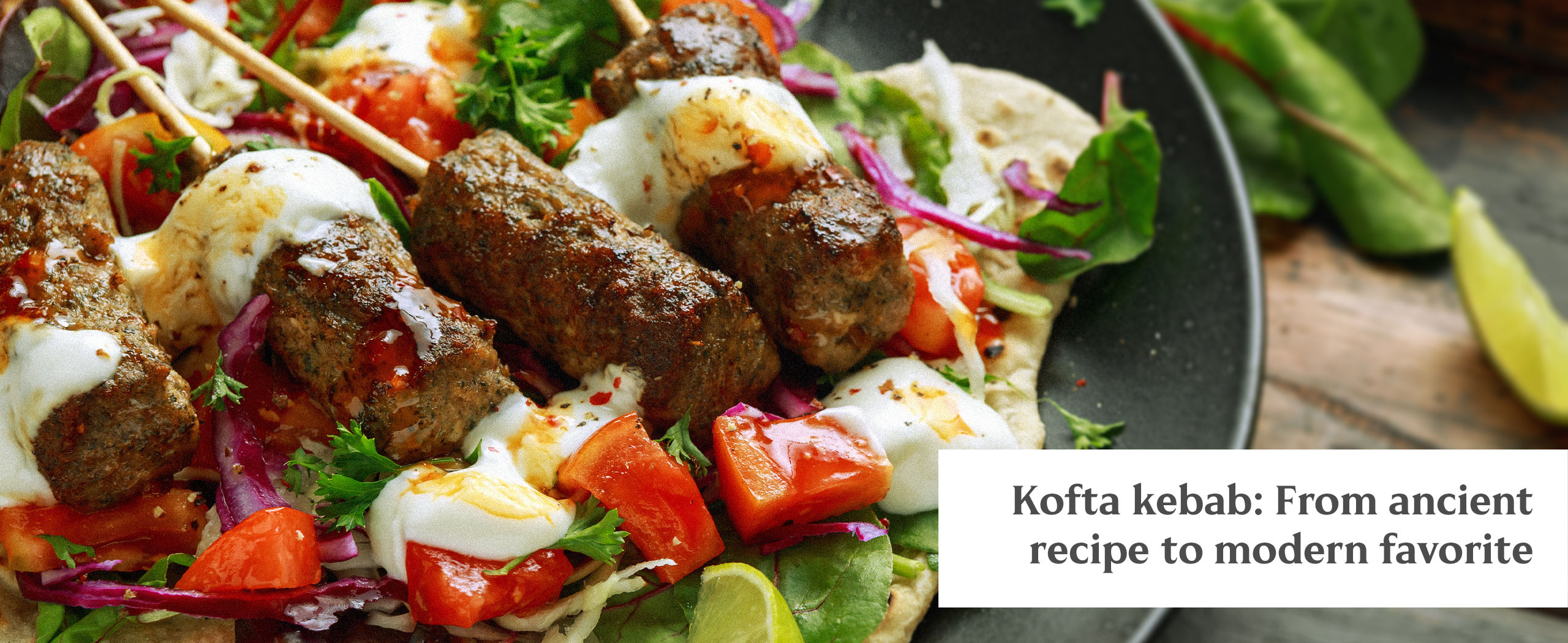
Next time when you eat a wrap with your preferred bread—pita, lavash, tortillas, etc., with your favorite filling ranging from meat to various vegetables and salads with dipping sauces to go along, think of how natural it is to take a bit of bread and use it to scoop up food and to eat bites of bread that have absorbed the gravy or sauce in a dish.
Thinner and flatter breads are ideal for using as edible vessels. For example, in the Indian subcontinent, it is common to serve food on top of a paratha, or any other type of thin flatbread. No matter which one of the wraps of the world it is, bread acts as a spoon and even a plate.
The idea is so natural that it would be difficult to pinpoint the exact origin of wraps—where and when people started using bread to hold their meals without bothering with dishes at all, by making wraps. However, it is commonly believed that the history of wraps started with the ancient Greeks doing precisely this. They used their pita bread to wrap meals for workers and soldiers. Similarly, progression from wrap to roll is also a natural one.
The breads that make the wraps of the world
The Greek pita
It is quite amazing to see how many types of breads we eat today were also made thousands of years ago. In ancient Greece, wheat and barley flour were used to make pita bread. It was baked and could stay fresh for a long time. This made it ideal for soldiers and travelers. In modern times, souvlaki makes a popular Mediterranean wrap—grilled meat or chicken, served hot on pita bread with tomatoes and onions, and a side of tzatziki sauce. Just as we do today, people also wrapped their meals in pita and dipped the bread in sauce centuries ago.
The Armenian lavash
The Armenians had their lavash. It is traditional thin bread. The dough is simple. It is made by kneading wheat flour and water together. The dough is rolled out thin, put onto an oval cushion, and stuck on the wall inside a conical clay oven. The bread gets done in a matter of seconds and is pulled out. It can be preserved for a period of up to six months. Cheese, vegetables, and meat are common fillings for the lavash wrap.
The Mesoamerican toritlla
Nothing is more commonly associated with wraps than tortillas. Tortillas, too, are centuries old. The Mayans used to cook whole corn in boiling water with wood ashes. Traditional methods in Mexican home cooking use slaked lime or calcium hydroxide. This process releases proteins, vitamins, and minerals in the corn grains, making them available to the body for assimilation. Today, nixtamalized corn flour (grains that have been soaked and cooked in an alkaline solution) is available to simplify the process. Wheat flour tortillas are also widely used.
Saj bread from the Levant
Saj bread has been prepared since ancient times across the Levant region—Lebanon, Syria, etc. The dough is simple. Traditionally, it is made with whole wheat flour, but all-purpose flour is also used these days. This thin, almost translucent bread cooks very quickly on a domed metal griddle or the saj. It has a chewy texture and makes perfect flatbread wraps with fillings such as cheese, vegetables, meats, combined with dips like hummus.
The Indian paratha
Parathas are a type of flatbread, prepared across the Indian subcontinent. Commonly made from whole wheat or all-purpose flour, the dough is rich, with ghee or butter, and the paratha has a crispy and flaky texture. Traditionally, food would be served on top of paratha, or meat and vegetable-based fillings would be stuffed between layers of dough and cooked. Today, paratha wraps and rolls are prepared with various fillings, with skewered kebabs as a top favorite across the region.
Arguably, rolls could also be considered a type of wrap among the many wraps of the world. They are also convenient to carry around and easy to eat while on the move. When it comes to rolls, one of the most famous is the South Asian spring rolls. Vietnamese rolls are made with rice flour wrappers, while traditional Cantonese ones are made with wheat flour.
Some unique wraps of the world
The Indian Kati roll
Kati rolls are paratha wraps that originated in Kolkata, West Bengal. The dish quickly became a hugely popular street food all over India. It was created in the 1930s, when skewer-roasted kebabs were wrapped in a flaky paratha at Nizam’s restaurant. According to one story, British guests at the restaurant didn’t want to eat kebabs with their hands, so they were rolled up in a paratha and served in paper packaging.
Unlike Mexican burritos, shawarmas, and gyro wraps, the kati roll did not use shredded or sliced meat on a neutral-tasting tortilla or pita, but a skewered kebab wrapped in rich bread, offering more texture and depth of flavor. Today’s Kati rolls are paratha wraps with meat, cheese, vegetables, chutneys, and more.
The Korean Ssam
Another unique wrap of the world is the Ssam, or the Korean beef lettuce wrap. Thinly shredded beef bulgogi is marinated in soy sauce, sugar, sesame oil, ginger, and various Korean spices, and grilled or fried. The beef is then wrapped in lettuce. Any type of lettuce can be used, but crispier and firmer leaves are preferred so that they don’t fall apart.
The Japanese Temaki sushi
Temaki sushi or hand rolls are different from other types of sushi. The nori (seaweed wrapper) in this type of sushi is filled with rice and toppings and then hand-rolled into a conical shape. Other types are rolled with the help of a bamboo mat and then sliced. Temaki sushi is made into small portions and is eaten with hands instead of chopsticks. The Japanese words te (hand) and maki (roll) define this type of sushi. There are several stories about how this type of sushi was created. Some say that in 1971, a Tokyo restaurant made this sushi for younger customers. Others claim that it appeared much earlier in 19th-century Japan to meet the need for eating on the go. In any case, temaki sushi contains every ingredient it should have inside the roll, together with wasabi and soy sauce. No utensils are required to eat it.
The Mediterranean Sarma
Sarma is a Turkish word that means to wrap, and it’s also a popular dish in Turkish cuisine. To make it, cabbage, vine, and chard leaves are used to wrap herbs, rice, and meat. The dish is prepared across the Mediterranean and the Balkans.
The European Lefserull
The Norwegian lefserull is a European wrap. Lefse is a traditional Norwegian flatbread. It is soft and flexible. The lefserull comes with different fillings. The most common are smoked salmon, cream cheese, rocket salad, and meat.
Wraps of the world—viral trends with old roots
Wraps are incredibly versatile and customizable—practical for carrying and easy to eat.
Today the wrap is not only popular, it is also used to make new dishes, for example a modern low carb/high protein wrap—perhaps a tasty innovation made with chickpeas in tahini with bell peppers wrapped in lettuce, a wrap made from lentils instead of flour with vegetable filling, or a delicious crunchy burger wrap you want to dig into after a long day. There is also a popular trend of dessert tortillas with a dizzying array of fillings from chocolate, ice cream, marshmallows, to fresh fruit, nuts, various syrups, and toppings.
But if you think about it, the new creative dishes evolve out of centuries-old culinary concepts.
Today, the shawarma, gyro, doner, and burritos served wrapped in flatbread are meals that we are used to as modern and global street foods. However, the modern varieties of wraps, whether from the Mediterranean, Mexico, China, India, or Norway, have all come to us from a long way back in our culinary history. For example, the taco goes back to the Aztec Indians. Freshly made corn tortillas were used to scoop up food when no utensils were around. Travelers, workers, and soldiers were wrapping their food in bread across the world.
It is believed that crepes, hugely popular in France, but also prepared in many other European countries, were eaten as early as the 5th century. The thin batter made with flour, milk, and eggs is cooked on a hot surface. The elegantly thin crepes can be eaten as dessert with fillings such as sugar and jam, etc. These days, the fillings can be so numerous that it becomes difficult to choose your favorite ones. Crepes are also served as savory bites, with cheese or mushrooms.
Concluding words…
So, at the expense of a cringey pun, we can wrap up the discussion about wraps of the world by thinking about how long back our culinary traditions go and how food, an ancient symbol of hospitality, keeps on taking new shapes. A bite out of a new kind of wrap is connected to an ancient bite somewhere in time and place. Talking about bites, perhaps it’s time to take a hearty bite of Kaiser’s finger-licking good Tandoori Chicken Roll or the Chicken Kabab wrap…!