Tandoor oven: An ancient tradition that birthed today’s smoky faves
Today, tandoori cuisine is popular around the globe. From the famous Indian tandoori flatbreads, including various kinds of naan and roti, to meat and chicken dishes, tandoori cuisine has evolved into a modern global trend—and it all began thousands of years ago with the tandoor oven in the Indus Valley.
The ancient clay ovens of the Indus Valley civilization laid the foundation of a great culinary tradition that became hugely popular under Mughal rule. It continued to evolve all over the Indian subcontinent, incorporating a variety of culinary influences until it became a vital element of the cultural and social life of communities across the vast region of modern-day India, Pakistan, and beyond.
How the tandoor oven works: Optimal design!
Traditionally, the tandoor oven was made of clay shaped into a tall cylindrical urn and sunk into the ground up to the neck. Wood or charcoal was used to create fire at the base of the oven. Nowadays, these ovens can be over the ground and use gas or other fuel, but the basic structure and principles of the creation and management of heat remain the same. Clay tandoor ovens can reach very high temperatures, up to 900 °F, and the heat is controlled by opening or closing a top lid or a vent at the bottom. Fuel can be added for intense heat, and coals left to burn as embers for slow cooking. The oven is the hottest near the base. Placement of food, rotating skewers, etc., is critical to how heat is managed to drive desired results.
How to use the tandoor oven: Master the secrets of fire!
One of the key secrets of the tandoor oven is the intensity of heat it can speedily generate from the fire at its base. Quick and intense heat means that food can be cooked very quickly. Moisture is sealed inside, while the outer layers become crisp. At the same time, the food absorbs a smoky flavor from the fire.
The clay tandoor oven might have a simple design, but preparing food in it, from a plain naan to lamb, requires mastery over a craft that is as old as the oven. Tandoor ovens combine different ways of cooking food, similar to both grilling and baking.
While some foods will require quick cooking at intense heat, others need to be cooked for longer times on low heat, and frequently, both intense and low heat will be used at the right time to produce a desired result.
This is the main reason why tandoori food is typically not prepared at home. The oven requires not just space that most homes don’t have, but also mastery over the fire that heats it. Knowledge and skills to use a clay tandoor oven are usually handed down from generation to generation or acquired through apprenticeship to masters of tandoori cuisine.
In the heart of the tandoor oven: Conduction, convection, and radiant heat
There are three main heating processes involved in cooking. Conduction means that when food comes in contact with something hot, it also heats up, like water boiling in a hot pan, or an egg in boiling water.
Convection, on the other hand, is a heating process that involves the distribution of heat through the motion of heat currents. A convection oven is an example, where a fan blows hot air. This reduces cooking times and results in more uniformly cooked food.
Radiant heat is the third main heating process for cooking. In this method, intense heat is created to travel from the heat source, for example, a charcoal grill, through the air to the food.
The tandoor oven generates a lot of radiant heat that reaches the food from the base and the sides. Meat or chicken on skewers suspended within the clay tandoor oven is slow-roasted using radiant heat for the cooking process. At the same time, hot air currents from the fire at the base are circulating the food as in a convection process. When flatbread, such as tandoori naan or roti, is put against the hot inner surface of the tandoor, intense heat is conducted directly to the food, cooking the flatbread in a few minutes.
The Maillard reaction in the tandoor oven
In 1912, French physician and chemist Louis-Camille Maillard described the process by which food is browned and gains a specific savory flavor. This is now known as the Maillard reaction. The process is a chemical interaction involving amino acids and simple sugars that leads to the production of hundreds of new, different molecules, leading to browning, but more importantly, to added flavor.
The process occurs in the preparation of almost all foods, but the resulting flavors and aromas are different for each. This is because simple sugars and amino acids in various foods interact differently. Baked bread and roast chicken both undergo the Maillard reaction but produce very different flavors.
The Maillard reaction occurring inside the tandoor oven produces the distinct tandoori food flavor that makes it so attractive. High-intensity radiant heat within the tandoor leads to a rapid Maillard reaction, searing and charring the exterior of foods, while preserving moisture inside.
Authentic tandoori cooking: The marinades and spices
Tandoori cuisine extends beyond the use of the clay tandoor oven. Ingredients, including meat, chicken, and vegetables such as eggplant, cauliflower, potato, etc., are traditionally marinated in spices, herbs, and Indian yogurt or curd overnight prior to cooking.
Spices used in tandoori cooking play as big a role in the overall flavor and texture of tandoori food as the fire. Spice mixtures for tandoori recipes tend to vary from region to region, but the most frequently used are Kashmiri red chilis, cumin, coriander, turmeric, etc. Typically, the marinade is yogurt-based with garlic, ginger, and lemon juice.
Spice-infused ingredients marinated overnight, charred, and cooked in the smoky heat of the tandoor oven create the unmistakable and unforgettable flavor of traditional dishes such as tandoori chicken, seekh kabab, fish tikka, tandoori lamb chops, paneer tikka, tandoori Aloo, etc., and flatbreads such as tandoori roti and naan.
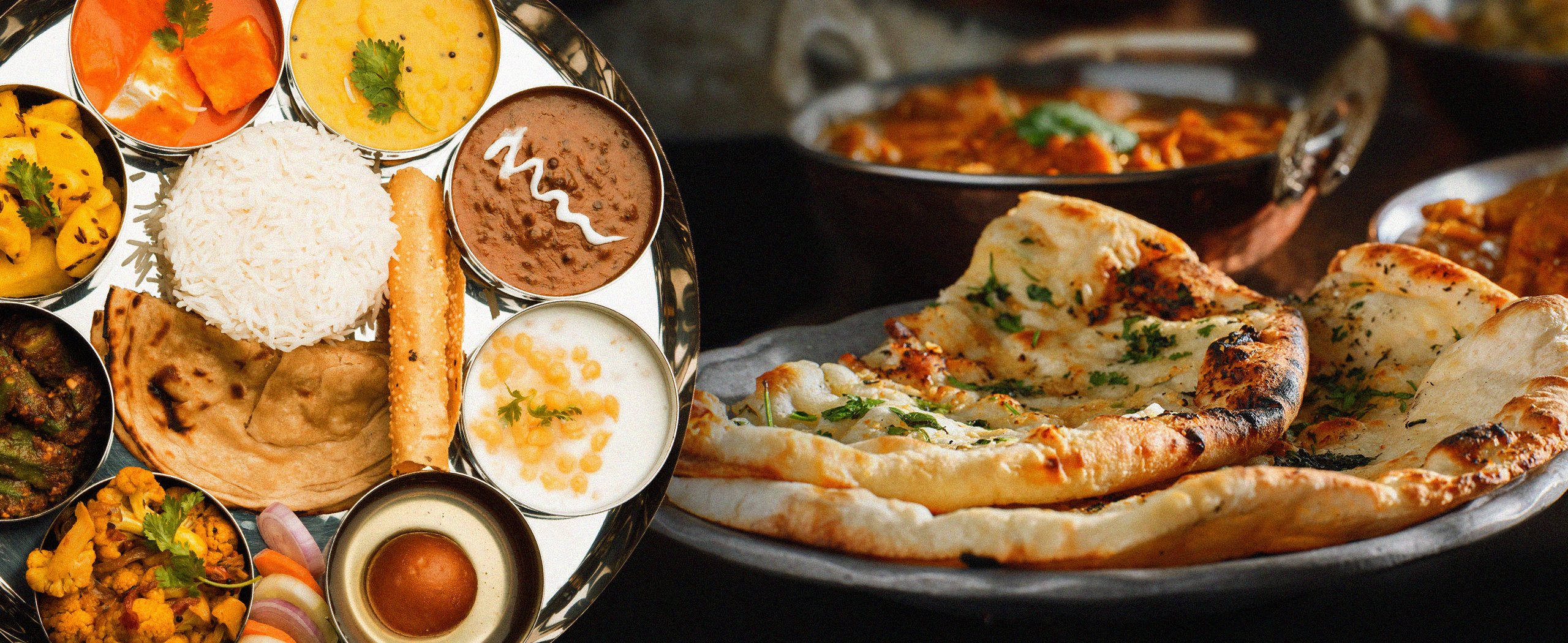
Global favorites such as chicken tikka masala and butter chicken are traditionally prepared with chicken previously cooked in a tandoor oven. It wouldn’t be amiss to mention that you can always enjoy these dishes with Kaiser’s tandoori naan, plain or with garlic!
|
How about an effortless tandoori dinner tonight? |
Home tandoor oven cooking: Adapting the traditional tandoori chicken recipe
It is not possible to recreate tandoori recipes at home perfectly. Nothing can really replace the actual tandoor oven, but it is possible to prepare a dish that comes close enough to satisfy your cravings when you can’t get hold of the real deal, or if you like to challenge yourself in the kitchen!
Tandoori chicken is perhaps the best-known and most popular dish in tandoori cuisine. In order to prepare it at home, you will need to have a blend of tandoori spices and use your conventional oven in a way that will result in juicy and tender chicken with a perfect crispy sear on the outside.
These days, you can buy tandoori masala mix in a supermarket close to you. If you want to try to make your own blend, here is a simplified and easy recipe. You can make a batch, store it in an airtight container, and use it for different dishes.
Remember, in order to prepare the marinade for tandoori chicken, you should combine your store-bought or home-made spice blend with fresh ginger, garlic, oil, dried fenugreek leaves, lemon juice, and Indian yogurt (curd). Tandoori chicken is usually prepared with skinless, bone-in chicken legs, including drumsticks and thighs. The marinade should cover the pieces of chicken uniformly. Ideally, leave the chicken marinade overnight in the fridge. Here is a simple recipe for using a conventional oven to prepare delicious smoky tandoori chicken.
Concluding words…
Thousands of years ago, our ancestors in the Indus Valley crafted clay tandoor ovens and tamed fire to bake bread and to roast meat and vegetables. These ovens brought communities together just as the fireside in a home brings a family together.
Centuries passed, and culinary traditions evolved, mingling with influences from various regions, leading to today’s worldwide popular tandoori cuisine. Amazingly, today’s tandoor oven is really not much different from the thousands of years old oval shaped clay oven that was used in the Indus Valley, a legacy of fire and clay, and human invention that seems to have conquered time.